


Things to Do in Martinique: the Island's Highlights
Looking for the best things to do in Martinique with a week, ten days or longer ahead of you?
The island of flowers, as the French Caribbean calls it, answers with its geography: white sand beaches and turquoise water in the south, a volcanic north island under dense rainforest, a calm Caribbean side and an Atlantic shore swept by the trade winds. Between the beaches, the hiking trails, the snorkeling, the rum distilleries and a living Creole culture, there are a lot of things to do, and the tourist attractions are spread across the whole island of Martinique. From Les Salines to Mont Pelée, from Diamond Rock to the historical sites of Saint-Pierre, from Fort-de-France to the Jardin de Balata, every area can be visited in a day from a single base, and local life does the rest.
Here are the highlights of a first trip to this destination, a beautiful Caribbean island, with the ideal place to stay: Hotel Carayou & Spa, at Pointe du Bout.
From December to April, the dry season offers the best conditions to travel to the French Antilles, and a rental car puts most of the island, and every view worth the detour, within a 70 km radius. Beaches in the morning, a walking tour of the city in the afternoon, a hiking trail the next day: all that is left is choosing where to start.
What to do in Martinique depending on how long you stay
Martinique is only seventy kilometers long, which gives a misleading sense of proximity. Mountain roads wind endlessly and it often takes a good hour to link two places that look close on the map. Build an itinerary area by area rather than zigzagging from one commune to the next.
One week in Martinique
Seven days cover the south, the city of Fort-de-France and one trip into the hills without rushing. Give three days to the southern coast, one day to the capital, one day to Mont Pelée and its ruined town, one day on a boat and a last with no plan. This leaves room for the unexpected, which makes the most unforgettable memories.
Ten days, two weeks or longer
Beyond a week, Martinique opens up properly. You can add the Caravelle peninsula, the islets off Le Robert, a hike towards Grand'Rivière, two or three distilleries and the pottery village of Les Trois-Îlets. A longer holiday also allows for doing nothing, which counts as an activity in the tropics. A loose programme beats a timetable.


The Most Beautiful Beaches in Martinique
Starting with the sea is the best introduction. The coastline of Martinique packs a variety of sand that is rare in the Caribbean: golden in the south, grey in the centre, properly black further up. Swimming is possible all year in water that rarely drops below 26 degrees. Our picks are on the page devoted to the beaches of Martinique. At the Carayou the first one sits at the end of the garden, under the sea grape trees.
The south, from Sainte-Anne to Les Salines
Les Salines beach is the postcard of Martinique: a kilometer and a half of white sand, palm trees leaning over the shore, shallow enough for children. Sunbathing and swimming are the whole programme, so come early or late. Allow 42 km from the hotel, around fifty minutes. Further east, Anse Trabaud and the Savane des Pétrifications offer a wilder shoreline of real natural beauty. Sainte-Luce and Le Marin add sheltered coves and fishermen's restaurants.
The coves of the Caribbean coast
Between Les Trois-Îlets and Le Diamant the shoreline breaks into tiny coves. Anse Dufour and Anse Noire, separated by a single headland, shelter green turtles a few meters out and rank among the best snorkeling spots on the island, both free, twenty minutes from the Carayou. The jetty at Les Anses d'Arlet, with its church facing the water, is the most picturesque beach in Martinique and the best photo stop of the trip. Further along, Grande Anse unrolls a crescent sheltered from the wind.
Le Diamant and its rock
At Le Diamant, the long strand faces Diamond Rock, a volcanic sentinel offshore and a former British naval position. The view from the shore is magnificent at sunset, one of the beautiful views of the south, with the outline of Saint Lucia on the horizon. The swell makes swimming tricky along part of the bay, and signs mark it out. Morne Larcher, just behind, offers a short trail and breathtaking views from the heights. Take a photo late in the day and the light does the work, which is why the spot fills every photo feed on the island.
The black sand shores of the north
Past the ruined town the scenery changes completely. At the end of the Prêcheur road, Anse Couleuvre unrolls, alongside Anse Céron, a black sand shore backed by dense forest, the only forest of its kind up here, with a clear view of Dominica on the horizon. The landscape turns rawer, almost mineral. Le Carbet, where Christopher Columbus is said to have landed in 1502, has a long shaded beach lined with terrace restaurants. These northern coves are earned by a winding road, which keeps the crowds away.
The Atlantic side of the island
Less known than its western counterpart, the Atlantic side still lines up fine stretches of shore. Cap Chevalier opens onto an islet and shallow water. At Le Vauclin, Faula is a lagoon where you wade a hundred meters without losing your footing, ideal with young children. Tartane and Anse Bonneville draw surfers in every season. These eastern shores are cooler and choppier, but you meet far fewer visitors. Le Vauclin and Cap Chevalier are 42 and 37 km from the Carayou.


The Most Beautiful Beaches in Martinique
Starting with the sea is the best introduction. The coastline of Martinique packs a variety of sand that is rare in the Caribbean: golden in the south, grey in the centre, properly black further up. Swimming is possible all year in water that rarely drops below 26 degrees. Our picks are on the page devoted to the beaches of Martinique. At the Carayou the first one sits at the end of the garden, under the sea grape trees.
The south, from Sainte-Anne to Les Salines
Les Salines beach is the postcard of Martinique: a kilometer and a half of white sand, palm trees leaning over the shore, shallow enough for children. Sunbathing and swimming are the whole programme, so come early or late. Allow 42 km from the hotel, around fifty minutes. Further east, Anse Trabaud and the Savane des Pétrifications offer a wilder shoreline of real natural beauty. Sainte-Luce and Le Marin add sheltered coves and fishermen's restaurants.
The coves of the Caribbean coast
Between Les Trois-Îlets and Le Diamant the shoreline breaks into tiny coves. Anse Dufour and Anse Noire, separated by a single headland, shelter green turtles a few meters out and rank among the best snorkeling spots on the island, both free, twenty minutes from the Carayou. The jetty at Les Anses d'Arlet, with its church facing the water, is the most picturesque beach in Martinique and the best photo stop of the trip, as our photo gallery shows, photo after photo. Further along, Grande Anse unrolls a crescent sheltered from the wind.
Le Diamant and its rock
At Le Diamant, the long strand faces Diamond Rock, a volcanic sentinel offshore and a former British naval position. The view from the shore is magnificent at sunset, one of the beautiful views of the south, with the outline of Saint Lucia on the horizon. The swell makes swimming tricky along part of the bay, and signs mark it out. Morne Larcher, just behind, offers a short trail and breathtaking views from the heights. Take a photo late in the day and the light does the work, which is why the spot fills every photo feed on the island.
The black sand shores of the north
Past the ruined town the scenery changes completely. At the end of the Prêcheur road, Anse Couleuvre unrolls, alongside Anse Céron, a black sand shore backed by dense forest, the only forest of its kind up here, with a clear view of Dominica on the horizon. The landscape turns rawer, almost mineral. Le Carbet, where Christopher Columbus is said to have landed in 1502, has a long shaded beach lined with terrace restaurants. These northern coves are earned by a winding road, which keeps the crowds away.
The Atlantic side of the island
Less known than its western counterpart, the Atlantic side still lines up fine stretches of shore. Cap Chevalier opens onto an islet and shallow water. At Le Vauclin, Faula is a lagoon where you wade a hundred meters without losing your footing, ideal with young children. Tartane and Anse Bonneville draw surfers in every season. These eastern shores are cooler and choppier, but you meet far fewer visitors. Le Vauclin and Cap Chevalier are 42 and 37 km from the Carayou.


Hiking, Mountains and Rivers
The interior holds as many surprises as the shoreline. Explore the rainforest and you will find more than two hundred kilometers of marked trails cross the rainforest, and the rainforest here is as dense as any rainforest in the Antilles, the hills and the old sugar cane estates. A waterfall, a ridge and a river crossing follow one another on a single route. Bring proper shoes, plenty of water and leave early. The island's two regional parks protect this natural beauty, and both parks are free.
Mont Pelée, Martinique's active volcano
The highest point on the island at 1,397 meters, Mont Pelée is climbed by three routes, the Aileron trail being the busiest. Allow four to five hours there and back. This active volcano, responsible for the destruction of the town in 1902, is a World Heritage site with the Pitons du Carbet. Set off early, cloud settles on the summit by mid morning. The volcanic cone dominates every view in the north.
The Caravelle peninsula
At La Trinité, this nature reserve pushes ten kilometers into the ocean. The view opens suddenly at the lighthouse, and the main trail loops the reserve in three hours, through mangrove, dry savane and windswept cliffs, with the Caravelle lighthouse and the ruins of Château Dubuc as the finale. The beautiful views over Galion bay justify the detour. It is one of the finest hikes here, families manage it easily.
Waterfalls, rivers and canyoning
Martinique counts more than seventy rivers, and several can be descended with a canyoning guide. The Gorges de la Falaise are waded between two narrow walls up to a final waterfall, always with a guide. The Saut du Gendarme waterfall, at Fonds-Saint-Denis, is the easiest waterfall on the island, ten minutes' walk from the road. Closer to the city, the Absalon pools and the Rivière Blanche offer a freshwater swim under a canopy of tree ferns. Adventure at a gentle scale.
The Route de la Trace and the Jardin de Balata
Laid out by the Jesuits in the eighteenth century, the Route de la Trace climbs through lush vegetation towards Le Morne-Rouge. On the way you pass the Domaine d'Émeraude, a regional nature park, the second park on the island and above all the Jardin de Balata, a botanical garden featuring three thousand tropical plants around a Creole house, with walkways suspended from one tree to the next, each tree labelled by name. The heliconia flowers alone justify the stop, and the view from the upper walkway is the one everyone photographs. The garden is 40 km from the hotel.

Historical Sites in Martinique: Towns and Heritage
You cannot travel here without meeting the history of Martinique, and that history is everywhere. Martinique carries the marks of colonisation, of slavery and of its abolition, and the old estates, the museums and the memorials speak of it plainly. You learn as much here as anywhere, and that story is fully part of the trip, and this collective memory also feeds the music, the language and the festivals of a rich culture.
Fort-de-France, the island's main town
A walking tour of Fort-de-France takes a morning. The Schoelcher library with its metal frame, the Saint-Louis cathedral, named for the same Louis as the fort, Fort Saint-Louis and La Savane park make up the historic heart of the capital, and the view over the bay from the waterfront costs nothing, while the covered market concentrates spices, fruit and crafts. The Schoelcher library alone is worth a photo stop. The ferry landing is twelve minutes from the hotel, and the shuttle crosses in twenty minutes, far more pleasant than driving round the bay. Our hotel near Fort-de-France page covers the connections.
Saint-Pierre and the 1902 eruption
Once the economic capital, nicknamed the Little Paris of the West Indies, the town was wiped off the map on 8 May 1902 by the pyroclastic flow from the volcano. The ruined theatre, the Cyparis cell and the Franck Perret volcano museum tell that story. Habitation Céron shelters a rain tree several centuries old, a tree so wide it shades the courtyard, plus a mango tree older still. Allow 60 km from the hotel, an hour and a quarter.
Les Trois-Îlets, La Pagerie and the pottery village
Here the Savane des Esclaves rebuilds a village of the past and retraces three centuries of history, while the Pagerie museum, devoted to Joséphine de Beauharnais, recalls the childhood of the future Empress Joséphine in an old plantation house. The pottery village has kept its eighteenth century kilns and gathers art and craft workshops, one of the liveliest places of the south. All of it is fifteen minutes from the Carayou.
Cap 110 and the memory of slavery
On Anse Cafard, at Le Diamant, the fifteen white statues of the Cap 110 memorial honour the victims of a slave ship wreck in 1830. Facing the Gulf of Guinea, they form a free site that stays with visitors long after, and no photo does it justice. Among the historical sites of Martinique this memorial is the one people remember.


Rum, Distilleries and Food
Martinique produces the only agricultural rum in the world protected by a controlled designation of origin. This AOC rhum agricole governs the growing of the cane, the fermentation and the distillation, and most estates open their doors free of charge for a tour and a free taste.
Visiting a distillery
Distillerie Depaz at the foot of the mountain, Distillerie Neisson at Le Carbet, Saint-James at Sainte-Marie, Habitation Clément or La Favorite: every historic rum distillery opens its doors for a view of the ageing cellars, the Creole columns and a guided taste of the range, where you taste the cane behind the rum. The tour explains the process, from cutting the cane to ageing in the barrel. The estate also has a rum museum and a little train through the fields. Appoint a driver.
Markets and Creole cuisine
Traditional dishes like accras, blood sausage, chicken colombo, fish court-bouillon and coconut sorbet make up a local cuisine that blends African, Indian and European flavors into food you remember, and those flavors carry the whole menu. The markets of Fort-de-France and Sainte-Anne overflow with spices, fruit and homemade jams, and tropical fruit you will not find at home. Ti-punch and planteur open the evening, and shrubb appears in December. The Carayou kitchen serves this cuisine daily.
Carnival, music and traditions
The cultural calendar is packed. Carnival in Martinique starts in January, at Epiphany, and peaks during the jours gras, between February and March, with its walking groups and coded costumes. The Tour des Yoles Rondes races traditional boats from one village to the next in summer. Bèlè, drum and call and response singing, remains a living tradition, and the end of year festivities are covered on our Christmas in Martinique and New Year's in Martinique pages.
What to do in Martinique in the evening
Nightlife gathers around the marina, Anse Mitan, Sainte-Anne and Le Marin. The beach bars serve ti-punch and planteur with your feet in the sand until nightfall, often with live music. The capital comes alive at the weekend, with concerts of zouk or biguine. Further up the coast the evenings are quieter. Finishing a meal late is part of the local way of life, the slow life people come here for. The bars of Anse Mitan are a ten minute walk from the Carayou, and the Ti-Lolo snack serves sandwiches and drinks on the terrace. Ask at the front desk, programmes change constantly.
Things to Do in Martinique with Family
This destination suits trips with children remarkably well. The southern beaches offer calm water and distances are short. The Balata garden, the potters' workshops, the little tourist train and the boat trips are the most popular family activities. Older children enjoy guided canyoning, quad biking or a flight over the island in a microlight. Operators apply reduced rates for under twelves, and an all inclusive package makes the days easier.
Where to Stay When Visiting Martinique
Set on Pointe du Bout, facing the bay, Hotel Carayou & Spa holds a central position that changes everything when planning a trip. Les Salines is 42 km away, the summit 65 km, and the capital a twenty minute crossing from a landing twelve minutes from the door.
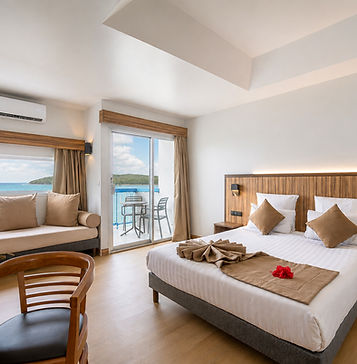
There are two types of rooms among the 132 air-conditioned rooms of around 25 m²: Garden View, deeper in the greenery and built for privacy, and Prestige Sea View, where a high floor gives an uninterrupted view of the water.
This beachfront hotel gives direct access to the beach from the garden, at Les Trois-Îlets.
Services, Dining and Relaxation at the Hotel
After a day of sightseeing, the all inclusive package removes the arithmetic: the all inclusive formula covers accommodation, meals, drinks, both pools and entertainment, settled in advance.
The restaurant blends Creole cuisine and an international menu, from grilled fish to tropical fruit, with a glass of wine or a ti-punch to follow, while the Ti-Lolo snack serves sandwiches, paninis, croque-monsieur, salads and drinks outside the packages.
The spa offers massages and treatments inspired by tropical nature, alongside a hair salon and a nail bar, and the reception speaks English around the clock.
Kayak and paddle are included, what the full board covers is set out separately, and the day pass opens the facilities for the day.
For a seminar or a private event, the business space will quote on request.


Planning Your Trip: Season, Transport and Budget
Martinique being a French department, no visa is required for European travelers, the euro is the currency and mobile plans work as they do at home. The direct flight from France takes around eight hours and lands at Aimé Césaire airport. Public transport is limited, so renting a car is advised for the hills and the east. The car is collected at the airport, and booking weeks ahead avoids surprises in December and April.
On the calendar side, the dry season runs from December to April, bringing the best conditions, with 29 degrees by day and little rain, as our when to visit Martinique guide explains. The rainy season, from July to October, is more humid but far quieter, and car hire costs noticeably less. Rates, special offers and the 50th anniversary offer are published on the official website, where booking direct saves up to 20%. Many travelers extend to Guadeloupe, forty minutes away by plane: Hotel Fleur d'Épée, at Le Gosier, belongs to the Blue Season Hotels group and shares the same spirit. Any practical question is answered in our FAQ or by the team, through the contact page.
What Budget to Plan for a Trip to Martinique
The flight is the first line of the budget, and its price doubles between the dry season and the quiet months. Then comes the car rental, to be booked early, then eating out. Boat outings and guided activities add up quickly. An all inclusive package often works out cheaper once you count three meals a day, drinks and activities. Booking direct and outside school holidays keeps control.
An Island to Explore Without Counting
Southern shores, the peak in the north, white shallows, distilleries and Creole tables: knowing what to do in Martinique mostly means accepting that one trip will not cover it all. Build an itinerary around two or three wishes, leave the rest for next time, and settle on this small peninsula to explore calmly. Hotel Carayou is waiting.
Frequently Asked Questions About Things to Do in Martinique
How many days do you need to visit Martinique?
A week covers the south, the city and part of the hills without rushing. Ten days to a fortnight is the ideal format for adding the hikes, a boat trip and the distilleries. Under five days, it is better to concentrate on one half of the territory.
What are the essential things to do in Martinique?
Les Salines above all, then Diamond Rock, the volcanic peak, the Balata garden, the ruins of Saint-Pierre, a distillery tour and a boat trip to the white shallows form the classic core. Not to be missed either, snorkeling with a turtle at Anse Dufour, open to everyone and entirely free.
What to do in Martinique when it rains?
Tropical showers rarely last long, so enjoy the museums, a distillery, the covered market, the pottery workshops or the Pagerie. The spa and the pools also make a very comfortable fallback for an afternoon.
Do you need to rent a car in Martinique?
Yes, if you plan to explore the north, the east and the natural sites, as public transport is limited. No, if you prefer to relax nearby: the ferry shuttle, taxis and guided excursions are plenty for a quiet week.
What is the best time to visit Martinique?
From December to April the weather is dry, sunny and barely windy. This ideal season also covers the end of year festivities and carnival. The rainy months, July to October, are wetter and warmer, but prices are noticeably gentler and the island is greener.
What to do in Martinique with children?
The quiet southern beaches, the Balata garden, the Savane des Esclaves, the little train and snorkeling trips all suit young children. Boat trips with a stop on the white shallows generally win every vote, young and old alike.
What are the most beautiful beaches in Martinique?
Les Salines, Anse Noire and its neighbour for the sea turtles, Grande Anse and the Anses d'Arlet jetty, Anse Couleuvre for black sand. Discover them one by one: each has its own character, and stringing them together is how you grasp the variety of this coastline.
Can you visit Martinique without a car?
Yes, if you stay at the marina. The ferry serves the city, shared taxis link the nearby communes and excursions collect their guests at the hotel. A car free stay is comfortable, as long as you accept missing the far north.
Where to stay to explore Martinique?
The choice of base shapes everything else. The marina side is the best compromise: the ferry links the capital in a twenty minute crossing with a fine view of the bay, the nearest coves are twenty minutes out, Les Salines 42 km. That is exactly where Hotel Carayou sits, with a spa, two pools and an all inclusive option.
Can you see turtles and dolphins in Martinique?
Yes, and easily. A green turtle grazing the seagrass at Anse Noire is visible with a simple mask from the shore. A dolphin pod, and sometimes sperm whales, are met on boat outings offshore, mainly between late autumn and May. Operators follow an approach charter.
What are the easiest hikes in Martinique?
The Trace des Caps, the loop around the Caravelle peninsula and the Cap Macré path suit occasional walkers. Morne Larcher needs more breath but stays short. The summit climb and the Gorges de la Falaise, on the other hand, demand real fitness and an early start.
What to bring back from Martinique?
AOC agricultural rum first of all, bought at the distillery after a taste or two, shrubb around the festive season, spices and chilli from the covered market, cocoa to taste at home, homemade jams and basketwork. Local pottery and madras fabric make fine souvenirs, more personal than anything from a shop.
Do you need a passport for Martinique?
Not for French and European nationals: this is a French department and a valid national identity card is enough. The euro is used, mobile plans work at no extra cost and no vaccination is required. Travelers of other nationalities follow the rules applying to French territory.