


Beaches in Martinique: The Most Beautiful Beaches to Discover
The best time to visit Martinique runs from December to April, during the dry season the islanders call carême. Trade winds sweep the humidity away, rainfall drops, and the Caribbean sea settles around 27 °C. This is peak tourist season on the island of flowers, with sunny weather, warm nights and the widest choice of excursions. Yet every month has its own advantage: lower prices in the wet season, beautiful beaches almost empty in September, vibrant Creole culture in February. This travel guide walks you through the weather in Martinique month by month, the ideal period for each kind of holiday, and where to stay in the south of the island, at Hôtel Carayou & Spa in Pointe du Bout.
Martinique's Two Seasons: Carême and Hivernage
Martinique has a tropical climate that remains warm all year. Average temperatures barely move: 22 to 25 °C at dawn, 29 to 31 °C in the afternoon, whatever the month. Heat is not what separates one season from the next. The difference is measured in humidity, in the rhythm of the showers and in the strength of the trade winds. Understanding that mechanism is the key to picking your dates, because it changes far more about a holiday here than the thermometer ever will.
The dry season, from December to April
Between December and April the trade winds blow steadily and dry the air. Rainfall drops sharply, the sky clears, underwater visibility becomes excellent for diving. February and March are statistically the driest weeks of the year, with a sea around 26.5 °C and generous sunshine from breakfast to sunset. This is also the peak tourist season: flights and hotels fill up weeks ahead, especially in the southern part of the island where most beaches are found. Late afternoon light is superb for photos, roughly between four and six.
The wet season, from June to November
Six months of rain? The myth dies hard. During the rainy season, known locally as hivernage, it rains more often, but in the form of short, intense tropical showers, usually late in the day, followed by a sky that reopens. These episodes remain remarkably local: a downpour can soak the heights above Saint-Joseph while the coast dries in full sun. Nature turns lush, rivers run high, the landscapes of the north gain an intensity the drier months never show. Hurricane season officially opens in early summer and closes on 30 November, with the highest chance of a storm in late summer. The water then reaches 29 °C, a record for the Lesser Antilles.


Weather in Martinique Month by Month
January, February, March: peak season and winter sun
These are the months Europe dreams about. Mornings are luminous, the air is dry, evenings settle around 23 °C, and cruise ships call into the bay while Fort-de-France comes alive at first light. Carnival lands in this window, the most intense cultural moment of the local calendar. The end of the run keeps the same perfect conditions and sees the first crowds thin out. Book early: rates peak here, and water sports and activities are often fully booked several days in advance.
April, May and June: the shoulder season sweet spot
April remains dry until mid-month, then tips gradually towards the wet season, just as spring settles over Europe. Showers return, but the island empties of visitors and rates fall noticeably. For travelers who want decent weather conditions, a controlled budget and no queues at the attractions, this window is the smartest choice on the calendar, and the easiest time to explore the island at your own pace. June is more humid, keeps beautiful bright spells, and offers a sea already hot enough for long swims, snorkelling and paddle sessions straight off the beach.
July and August: summer festivals and family holidays
Summer matches the school holidays in mainland France and brings a second wave of visitors, mostly families on a long vacation. It rains frequently but briefly, the heat holds steady, the sea climbs to 28 °C. This is the season of the Tour des Yoles Rondes, when the coloured sails of wooden hulls cross the bay and coastal villages celebrate late into the night. Each stage of the race turns into an encounter with the crews and the people who follow them, a spectacle children watch from the sand with their feet in the water. Bastille Day on 14 July, a French national holiday, adds fireworks over the harbour.
September and October: low season and cyclone watch
September and October concentrate the heaviest rainfall and the statistical peak of cyclone risk. In exchange, Martinique in September offers the lowest prices of the year, near-empty beaches and a landscape at its most spectacular. The average number of visitors drops sharply and the summer atmosphere gives way to a calm few travelers ever experience. If your dates are flexible and you accept a rainy afternoon now and then, the value is unmatched.
November and December: the return of sunny weather
From mid-November the weather stabilises, showers grow briefer, and the island slides back into its drier rhythm. Early December is one of the most underrated periods of the whole year: sunshine is already reliable, the sea still holds its summer high, and rates have not yet climbed to their Christmas level. Late December marks the true start of the tourist season, with a festive atmosphere in every town and Creole Christmas songs, the chanté Nwel, filling gardens and courtyards.

Which Season Suits Your Trip to Martinique?
The right dates depend less on averages than on what you intend to do once you land. Depending on whether you are here for the sand, the volcano, the carnival or the sailing, the ideal window shifts by several weeks.
Beaches, swimming and water sports
For pure beach days, the first months of the year are hard to beat. The white sand of Sainte-Anne, the calm bay of Anse Dufour where turtles graze a few metres from shore, and the long curve of Grande Anse d'Arlet all shine under a clear sky. If your idea of paradise is turquoise shallows and a shaded almond tree at noon, this is when you will enjoy it most. Sailing and kayaking are at their easiest, and the trade winds hold steady enough for windsurfing without turning the sea choppy.
Hiking, nature and the north of the island
Mount Pelée, the volcano that dominates the north at 1,397 metres, is best climbed between December and April. Around Morne-Rouge at its foot, annual rainfall dwarfs anything recorded in the south. The same goes for the rainforest trails near Saint-Joseph and the Balata garden above Fort-de-France, where an early start gives you the clearest views before the clouds gather. The reward is a stunning panorama over the Caribbean from the crater rim, an adventure worth the alarm clock. Check the map before you set off and pack proper shoes: volcanic soil turns slick within minutes of a shower. Packing a light rain shell is never wasted on this side of the island.
Culture, food and cultural experiences
Carnival owns the pre-Lent weeks, but the island's rich cultural calendar runs all year, and each season offers a different way to learn about its history. A guided tour of Habitation Clément at Le François pairs a restored Creole house with a contemporary art foundation and a rum cellar worth the detour. The 22 May commemoration of the abolition of slavery is a public holiday and one of the most meaningful dates on the island. On market mornings, the craft stalls of Trois-Îlets are where local culture is easiest to read, between pottery, spices and conversation. Few destinations of this size hold a heritage this unique.
Cruises, boat trips and island hopping
A cruise or a short flight opens the rest of the French Caribbean and beyond. Guadeloupe, where Fort Fleur d'Épée looks over the bay of Le Gosier, is barely forty minutes away by air. Saint Lucia and its two pitons rise on the southern horizon on clear days. Closer to base, a ten-minute crossing is all it takes to visit Fort de France, its covered market and the Schoelcher library. Ferries and organised excursions run most reliably from December to May, when the sea is at its flattest.
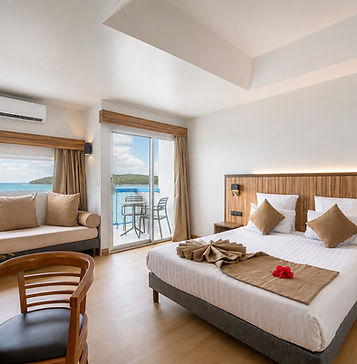
Where to Stay in Martinique: Hôtel Carayou & Spa
Set on Pointe du Bout, in the commune of Trois-Îlets, Hôtel Carayou & Spa faces the bay of Fort-de-France, a few minutes by ferry from the city centre.
Its 132 air-conditioned rooms of around 25 m² are decorated in a warm Creole spirit: 160 cm double bed, walk-in shower, flat screen, safe and free Wi-Fi. The small luxury is waking to the bay rather than to a corridor. The Prestige Sea View category opens straight onto the turquoise water of the Caribbean sea, while Classic Garden View rooms sit in tropical greenery a few metres from the pool, with more shade and more privacy.
Both offer the same level of service, in low and peak season alike, and the location remains one of the main advantages of this resort for exploring the island north and south.
All Inclusive, Spa and Activities by the Caribbean Sea
The all inclusive package changes how a day here unfolds: accommodation, buffet breakfast, lunches, dinners, drinks, access to both outdoor pools, entertainment and the wellness area are settled in advance. You pay once, before arrival, and nothing else. Kayak, paddle and snorkelling equipment are included, with the Pointe du Bout marina a two-minute walk away for a sailing outing or a dive. The beach is reached directly from the hotel garden, in a few steps. When the sky closes over for an hour, the loungers around the pools take over and the spa offers massages and rituals inspired by Creole nature. At the table, the restaurant blends Creole and international food, from accras to grilled fish and seasonal fruit. The real luxury is not having to think: the day's activities are already arranged, and the only decision left is which lounger to claim. At dawn, before the first boat leaves the marina, the whole bay feels almost exclusive.


Festivals and Events: Carnival, Yoles and Creole Culture
Carnival is the great annual event. During the four days that precede Ash Wednesday, Fort-de-France and the surrounding communes move to the rhythm of walking groups, costumes and vidés, until the effigy of Vaval is burned at sea. Summer belongs to the Tour des Yoles Rondes, the round yole race that circles the island between late July and early August, a tradition born from local fishing boats and now the biggest sporting event in the French West Indies. Add the May commemorations, the patron saint festival of each town and the December chanté Nwel, and these events form a calendar as useful as any weather chart when you plan your dates. There is a stunning simplicity to a village square at dusk, drums tuning up under the almond trees.
Travel Tips for Visiting Martinique: Flights, Budget and Getting Around
Martinique is an overseas department of France, which means no visa for European travelers, the euro as currency and mobile plans that work as they do at home. Direct flights link mainland France to Aimé Césaire international airport in about eight and a half hours, and a quick ferry crossing takes you from Fort-de-France to Pointe du Bout. Public transport exists but remains limited outside the main routes, so renting a car for at least part of your stay is the standard advice for reaching Grand-Rivière, the north coast or the quieter anses of the south. Car rental rates rise steeply in high season, so book early. Packing is simple: light clothes, a rain jacket for the wet months, reef shoes and strong sun protection. Learn a few words of Creole and doors open faster. The official website lists special offers throughout the year, and the quieter months bring the sharpest ones. Booking direct there secures the best available rate, with up to 20% off compared with other reservation platforms, and the booking team can be reached by phone or through the contact page for group dates.
Choose Your Season, Choose Carayou
Picture the bay lapping below your balcony at dawn, the smell of a tropical garden after rain, the sun dropping behind the lagoon. Knowing when to visit Martinique is what turns a good trip into a memorable one. At Pointe du Bout, Hôtel Carayou & Spa welcomes you all year round: beach a few steps away, all inclusive package, spa and views over the Caribbean. The ideal season is the one you choose.
Frequently Asked Questions About Visiting Martinique
What is the best period to visit Martinique?
The best times to visit Martinique run from December to April, when the trade winds keep the air dry. The weather is sunny, the sea sits at 26 to 27 °C and rain is rare. The driest weeks fall in late winter, though they are also the busiest and the most expensive of the whole tourist season.
What is the rainiest month in Martinique?
September and October record the heaviest rainfall of the year. Rain usually falls in short, intense tropical showers separated by bright spells rather than in continuous grey days. The north of the island, around Mount Pelée, receives far more rain than the south, where Pointe du Bout and the popular beaches are located.
Should I avoid hurricane season in Martinique?
The cyclone risk opens in early summer and closes on 30 November, peaking in late summer. Direct hits remain rare and forecasting is closely monitored by French national services. Many visitors deliberately choose this period for the deals and the quiet, taking out travel insurance that covers cancellation.
When should I visit Martinique to avoid the crowds?
To escape the crowds, aim for the start of the wet season or September. Hotels offer their lowest rates, sites and excursions can be booked at the last minute, and the sea holds between 28 and 29 °C. The trade-off is a few afternoon showers, which rarely last more than an hour on the southern coast.
What are winter temperatures in Martinique?
In December and January, minimum temperatures range from 22 to 24 °C in the morning and reach 28 to 30 °C in the afternoon. The air is drier, nights are pleasant and the trade winds are constant. No other winter sun destination in the French Caribbean is this comfortable a few hours from Europe.
How many days do you need in Martinique?
Ten to fifteen days let you combine the beaches of the south, Saint-Pierre and the Balata garden, a hiking day in the north and a boat trip offshore. One week is enough for a first taste, especially with a base at Trois-Îlets that keeps driving times down in every direction.